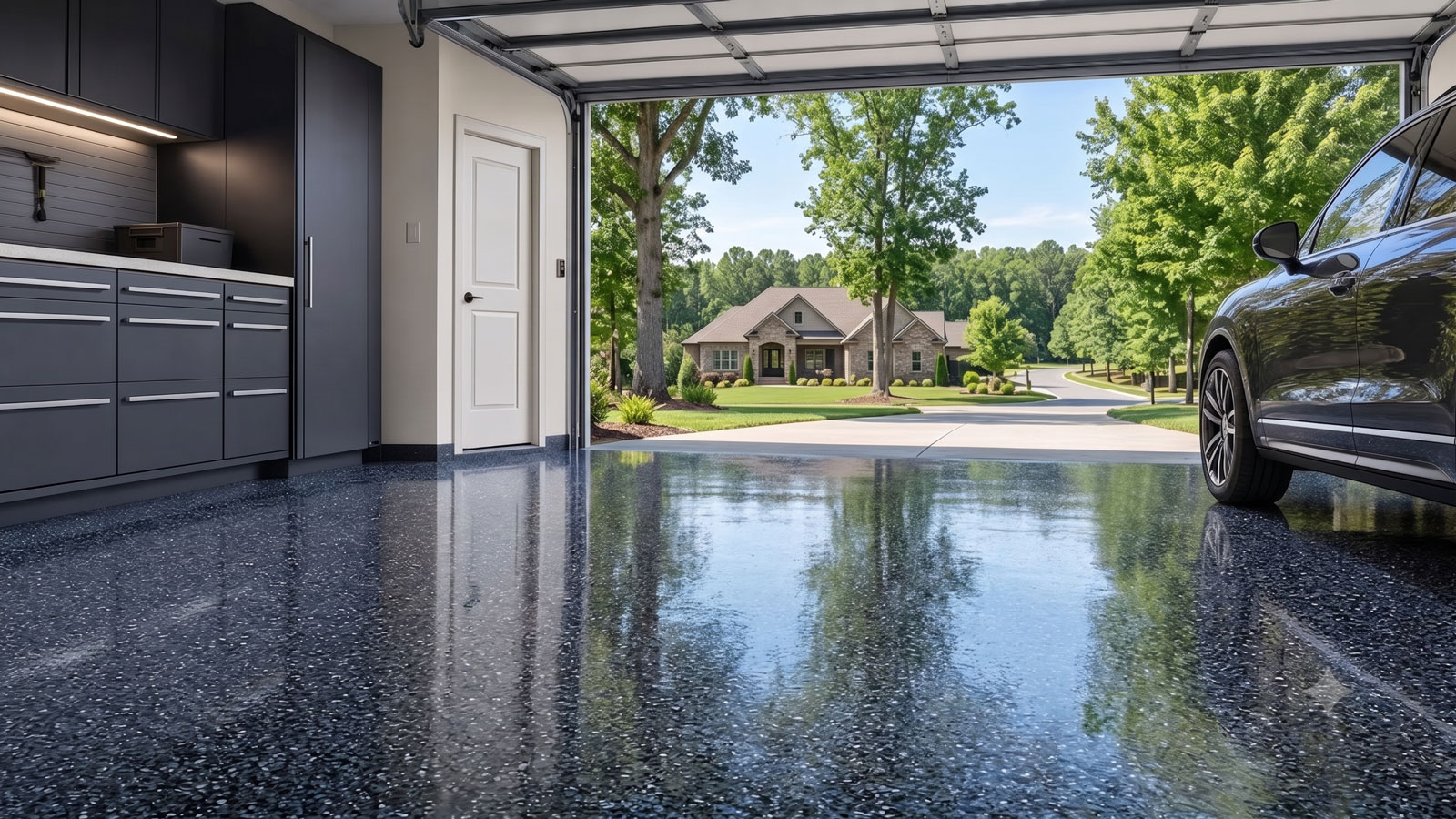
Garage & Concrete Floor Coating in West Haven, CT
Floor Coating Services in West Haven, CT
West Haven's Long Island Sound shoreline has generated its own formal coastal resilience work, separate from neighboring New Haven's harbor planning. The city completed a Coastal Resilience Plan dated April 28, 2017, evaluating seawalls, dunes, tide gates, sewer pump stations, inland runoff and property elevation as possible adaptation measures. Those options are about flood and infrastructure resilience, not the performance of a decorative epoxy floor in a private garage.
The city also maintains its own land-use planning and long-established residential neighborhoods with different construction and renovation histories. An older West Haven house may have a garage added long afterward or a slab repoured after damage. A newer garage can still have surface sealers or curing materials that require grinding. A project's proper scope follows cracks, previous finishes, contamination and moisture rather than a generalized shoreline label.
Water tracked in by vehicles, winter snowmelt and actual stormwater entering through a garage door are different problems. A coated surface on sound concrete can be easier to clean, but it cannot substitute for flood barriers, driveway grading or moving-crack repair. Before selecting epoxy, polyaspartic or flake, ask for a substrate assessment, realistic preparation and a complete cure plan.
Local Market Insight
West Haven's April 28, 2017 Coastal Resilience Plan evaluates physical flood-control options from dunes and tide gates to pump upgrades and structure elevation. That is a fundamentally different function from a residential garage coating.
What Affects the Cost of Garage Floor Coating in West Haven?
West Haven garage projects should be priced from the surface: past repair and paint, cracks, existing moisture and space configuration. Building age and floodplain context are useful research prompts but not a replacement for inspection.
Separate property drainage from floor-finishing costs. A bid should identify remediation exclusions and provide a specific plan for grinding, repairs, topcoat and time away from parking.
- Prior coatings and repairs: An established garage may carry paint, patch materials and embedded contaminants. Inspect previous films and include necessary removal before profiling the actual slab.
- Shoreline flood exposure versus slab water: Municipal coastal-planning maps cannot measure private concrete. Examine threshold runoff, past waterlines and persistently damp sections before installing resin.
- Snowmelt and grit: Vehicles can bring winter road treatments and slush inside. Existing deposits require cleaning before coating, and the finished surface still needs maintenance.
- Crack movement: Some cracks can be repaired with normal surface work; active movement and structural issues require different evaluation before finishing.
- Access and perimeter detailing: Older detached garages, steps, storage and floor drains affect equipment movement and edge work. Measure and scope the whole space.
- Complete finish and cure: Texture and topcoat influence traction and cleaning. Cold-season temperature limits, grinding and repair time determine when parking can resume.
Call for a clear, project-specific estimate — or request one online.
West Haven Coastal Resilience Is Not Garage Waterproofing
West Haven's Coastal Resilience Plan, dated April 28, 2017, examines a wide range of strategies for the city's shoreline and low coastal infrastructure. The plan's options include seawalls, bulkheads, dunes, floodwalls, tide gate improvements, road elevation, inland runoff management and retrofits to pumping stations. It also discusses property protection by elevation and floodproofing. These are site and infrastructure measures quite different from decorative floor coating.
At an individual garage, the first question is how water reaches the slab. A doorway receiving runoff after rain calls for exterior drainage inspection. Water from wet cars is ordinary cleaning exposure. Repeated dark patches without obvious surface water may warrant concrete moisture evaluation before choosing a coating system.
Epoxy and polyaspartic cannot be sold as substitutes for the city's flood-adaptation tools. They will not stop coastal inundation, hold back water beneath a door or stabilize a moving foundation. Where water entry is active, solve or professionally evaluate that condition before installing an attractive finish.
On a sound and suitable floor, a continuous topcoat can make tracked dirt easier to remove. Homeowners should focus the finish conversation on texture, UV exposure near doors, cleaning needs and documented curing rather than on floodproofing claims.
West Haven Garage Renovations and Connecticut Winter Use
West Haven's housing includes longstanding residential streets near the shore and later neighborhoods farther inland. An older structure may include a much younger garage floor, and a refurbished property might retain old paint or patches. Age alone is not proof that any concrete needs major repair, nor does a newly finished surface prove compatibility with a resin coating.
Inspect the garage after storage is removed, including edges, seams, darkened patches and areas near tires or tools. A contractor should assess old layers for adhesion, remove incompatible material and grind the concrete to the selected system's requirements. Cracks with continuing movement demand special attention beyond cosmetic filling.
During winter, cars track snow, grit and deicing residue inside, which makes both preparation and future maintenance important. A coated floor may help routine cleanup, but it does not prevent road treatments from accumulating. If snowmelt flows in from outside, the driveway or threshold needs separate review.
Compare installers using their written scope: removal, grinding, cracks, moisture evaluation when indicated, coating layers, topcoat texture, cleanup and restrictions on foot and vehicle traffic. That is a more reliable decision than prioritizing a quick advertised cure time.
Frequently Asked Questions
Does West Haven's coastal resilience plan mean my garage is flood-prone?
No. It evaluates citywide hazard and adaptation options; an individual property's flood exposure and garage condition require separate review.
Can an epoxy floor substitute for floodwalls or drainage?
No. Those systems address water outside or entering structures. A decorative coating cannot floodproof a garage.
Are older West Haven garage floors necessarily unsuitable?
No. Garages can have later repours or repairs. Inspect actual concrete and old treatments before assessing whether a coating is appropriate.
What should I do about tracked-in winter road salt?
Clean residues routinely and discuss topcoat texture and maintenance. The installer also needs to prepare existing contaminated concrete correctly.
What belongs in a West Haven floor-coating quote?
Request removal, grinding, cracks and repairs, moisture checks where appropriate, full resin layers, texture, perimeter work and cure times.
West Haven Neighborhoods & Local Context
Typical Project Cost
$3,000–$5,500
Typical range for a two-car garage. Final pricing depends on floor size, concrete condition, prep work, coating type, and finish options.
Helpful Guides
Other Service Areas