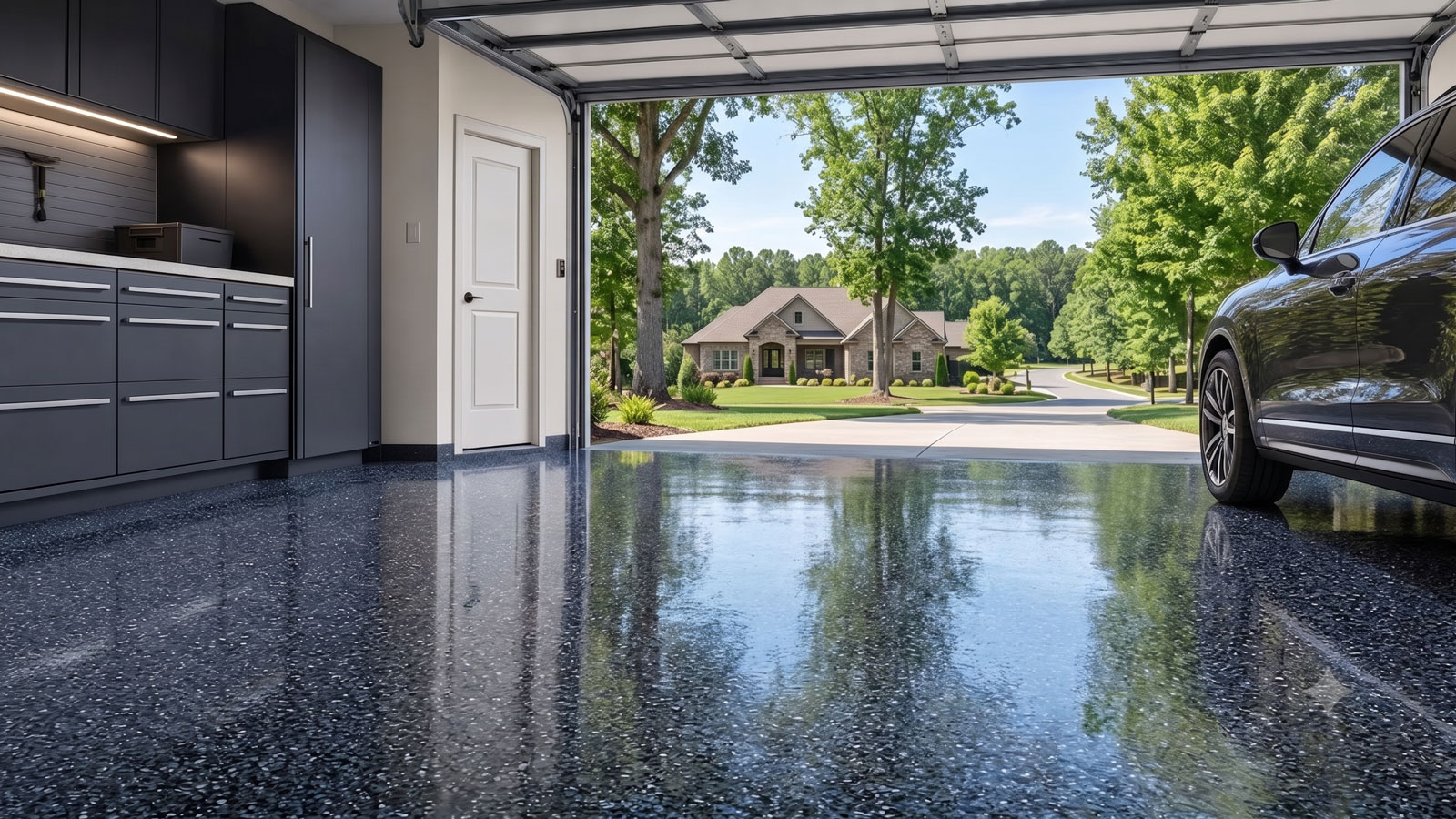
Garage Floor Coating in Branford, CT
Floor Coating Services in Branford, CT
Branford's shoreline villages and inland neighborhoods create a different garage-floor context from nearby New Haven. The town adopted its Plan of Conservation and Development in 2019, effective February 1, with separate studies of coastal issues, natural resources, residential development and community character. Earlier planning documents identified Meadow Street, Totoket Road and Briarwood Lane as areas warranting drainage attention. Those are specific municipal planning concerns, not evidence that a private garage at any of those locations is damp.
Branford's coastal resilience program also addresses sea-level rise, flooding, wetland protection and the varied shoreline. Inland garages and waterfront properties can have very different site conditions, while an old house may have a later concrete garage floor. A coating contractor must inspect the actual slab, driveway slope and past repairs rather than infer suitability from village history or coastal exposure.
Winter deicing residue and ordinary wet vehicles can make cleanability attractive. A sound properly prepared epoxy, polyaspartic or decorative-flake system may help with that routine maintenance, but it cannot floodproof a garage, redirect runoff or stabilize moving concrete. Ask about old paint, cracks, moisture testing where needed, grinding and return-to-service timing before selecting a finish.
Local Market Insight
Branford's current plan took effect February 1, 2019 and contains dedicated coastal and residential studies. Earlier municipal planning singled out Meadow Street, Totoket Road and Briarwood Lane for drainage attention, but property-specific concrete still requires inspection.
What Affects the Cost of Garage Floor Coating in Branford?
Branford garage preparation can differ between older village properties, later suburban homes and newer slabs. Past paint, repairs, moisture concerns and driveway access change the scope more than floor area alone.
Coastal mapping and drainage studies cannot establish the condition beneath a coating. The bid should document actual wetness, surface repairs and complete application requirements.
- Village garage history: A longstanding house may contain a later garage or replacement slab. Inspect prior paint, patches and surface strength rather than treating house age as concrete age.
- Coastal and inland runoff: Municipal planning identifies local drainage areas, but each driveway and threshold must be checked individually. Active water entry requires a different remedy from finishing concrete.
- Moisture compatibility: Humidity or nearby shoreline does not measure internal concrete moisture. Persistent dampness should prompt assessment against the selected product's limits.
- Old coatings and contamination: Garage paint, sealers and vehicle oils may obstruct adhesion. Include mechanical removal and treatment where necessary before applying new resin.
- Crack and joint repair: Inspect spalling, patched joints and structural movement. A decorative layer cannot stabilize an actively moving slab.
- Finish and curing: Texture should suit wet tires, stored equipment and cleaning. Cold-season application temperatures and vehicle-return restrictions may affect project scheduling.
Call for a clear, project-specific estimate — or request one online.
Branford's Shoreline Villages and Why Garage Age Varies
Branford's municipal planning distinguishes historic village centers, coastal areas and inland residential districts. The town adopted a Plan of Conservation and Development effective February 1, 2019, supported by separate research booklets on coastal issues, community character, residential development and other topics. Its land-use office also manages a Stony Creek review process alongside townwide zoning and wetland regulation. These municipal structures reflect a distinctive settlement pattern, not a direct age estimate for garage concrete.
An older shoreline-area home may have a garage built in a later decade or a floor replaced during renovation. Newer suburban garages can also retain sealer or curing agents that interfere with bond. A reliable coating inspection should look for existing paints, oil, patches, weak areas and cracks after belongings have been moved.
Where coatings are failing, proper removal and grinding should precede a new system. Ongoing structural movement is different from a stable surface crack and may require specialist evaluation. The quality of epoxy or polyaspartic materials does not eliminate the need to inspect the substrate.
Ask the contractor to record actual findings, edge and joint treatments, layer specification and curing. That supports a meaningful comparison between bids instead of assumptions from a prestigious waterfront or village address.
Branford's Named Drainage Concerns and Private Floor Moisture
Branford's earlier comprehensive planning identified concerns at Meadow Street, Totoket Road and Briarwood Lane, while its coastal resilience work considers flooding, wetlands and future shoreline conditions more broadly. These named locations and planning processes are important public facts, but they should not be presented as proof that any specific homeowner's garage takes on water.
At a garage, examine the driveway apron and the discharge of roof gutters. Check whether stormwater enters from outside or whether the floor simply receives moisture carried on vehicles. Unexplained persistent slab dampness is another distinct issue and may require product-specific testing before installation.
A decorative coating cannot substitute for coastal flood protection, grading improvements or structural repairs. If water flows beneath a door during storms, address that path independently. If the concrete is sound and suitable, a continuous finish may make ordinary cleaning of rain and winter grit easier.
Choose topcoat texture with cleaning and traction in mind, and request a sample of the actual finish. Make sure the proposed schedule includes all preparation, repair and cure time; a quick resin chemistry does not justify ignoring dampness or unresolved cracking.
Frequently Asked Questions
Do Branford's coastal plans prove my garage is too wet to coat?
No. Shoreline plans address regional hazards and named public drainage issues. A private garage needs its own inspection and appropriate moisture evaluation.
Are garages in Branford's older villages automatically damaged?
No. Garage concrete may have been added or replaced after a house was built, and many floors may be sound after proper preparation.
Can epoxy prevent water from entering a coastal garage?
No. Decorative coatings are not floodproofing or driveway drainage repairs. Active water entry needs its own solution.
What about salt and slush carried by vehicles?
A properly prepared coated surface may make regular cleaning easier, but deicing residue and water still need removal.
What should a Branford proposal document?
Ask for grinding, removal of existing finishes, crack work, moisture assessment where relevant, full layers, texture, edges and when vehicles can return.
Branford Neighborhoods & Local Context
Typical Project Cost
$3,000–$5,500
Typical range for a two-car garage. Final pricing depends on floor size, concrete condition, prep work, coating type, and finish options.
Helpful Guides
Other Service Areas