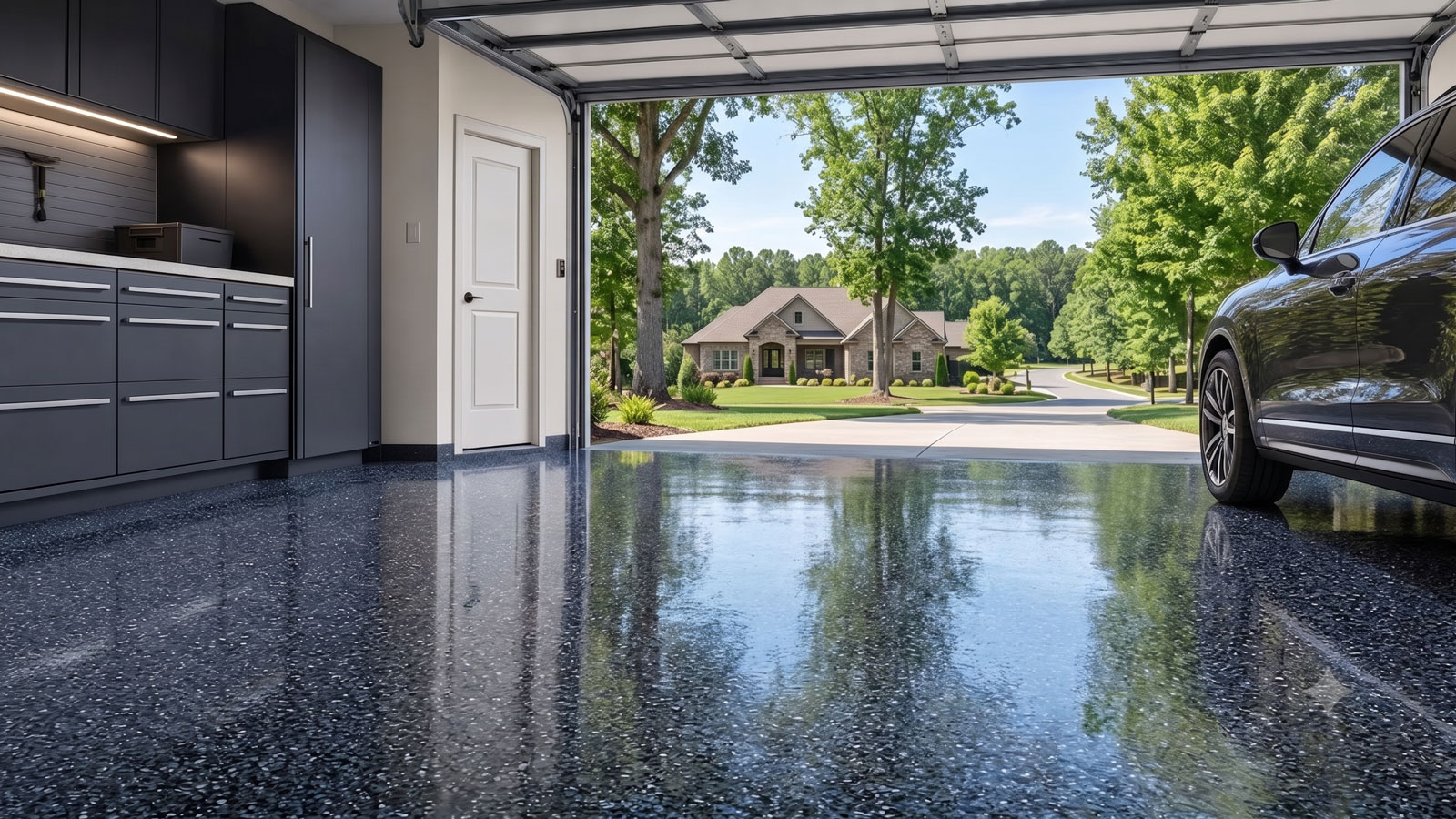
Garage Floor Coating in Cheshire, CT
Floor Coating Services in Cheshire, CT
Cheshire is an inland New Haven County town with a planning and residential setting different from the shoreline and downtown New Haven communities. Its townwide land-use framework considers preservation of open space, transportation and established neighborhoods, while the Farmington Canal Heritage Trail crosses the town as part of a regional recreational corridor. These facts indicate varied land-use histories and household uses, but neither a trail location nor a neighborhood's age tells a contractor when its garage slab was poured.
Connecticut winter roads mean snowmelt, grit and deicing residue may be tracked into garages used for daily parking. Cheshire's inland setting also has local drainage and watercourse considerations, yet public land-use mapping does not show whether a private garage has a low threshold or persistent moisture within concrete. The installer should observe the driveway, gutters and surface rather than assume a problem based on geography.
A floor that has been painted or patched may need different grinding and repairs from newly poured concrete with curing compounds. A suitable epoxy, polyaspartic or decorative-flake system can make sound prepared concrete easier to clean, but it cannot stop an actively moving crack or redirect runoff. Homeowners should compare complete preparation, coating layers, texture and curing.
Local Market Insight
Cheshire's inland New Haven County setting and the Farmington Canal Heritage Trail distinguish its neighborhood context from coastal towns. Connecticut winter deicing makes tracked residue credible, but a property-level inspection must determine any actual concrete defects.
What Affects the Cost of Garage Floor Coating in Cheshire?
Cheshire garages may reflect different residential construction and renovation periods. A slab could be much newer than its house, while recently finished concrete may contain incompatible sealers. Preparation should be based on actual conditions.
Compare bids using inspection of coatings, cracks, drainage and access rather than assumptions about suburban age or regional winter weather.
- Earlier finishes and seals: An older garage floor may carry paint, worn resin or penetrating sealer. Determine whether mechanical removal is necessary to achieve a suitable bond.
- Construction and repour history: A house's age does not establish its garage slab's age. Inspect patches, strength and prior repair materials before estimating surface work.
- Deicing salt and snowmelt: Winter vehicles bring slush and grit into the garage. Existing residue should be removed and concrete prepared before coating, while routine cleaning remains important afterward.
- Driveway runoff: Water entering from a downhill driveway or gutter outlet is different from tracked snowmelt. Exterior drainage issues require separate evaluation and correction.
- Floor defects and access: Cracks, steps, utility obstacles and storage change both repairs and grinding. The scope must cover edges and transitions rather than only open square footage.
- Flake, texture and temperature: The full coating system should match use and curing conditions. Compare texture samples and vehicle return time, particularly if work is planned during cooler months.
Call for a clear, project-specific estimate — or request one online.
Cheshire's Inland Residential Pattern and Concrete History
Cheshire's Engineering Department operates a municipal stormwater program under the small-MS4 framework and reviews proposals before the town's Inland Wetlands and Watercourses Commission. A public notice dated January 27, 2026 identifies state stormwater registration GSM000058 and the 2025 annual report. The town has also published a Byam Road Fire Station rain-garden project. These are specific drainage and infrastructure facts quite different from the coastal shoreline plans to the south; they cannot diagnose moisture in any one garage floor.
On established residential streets, a garage may have been extended, converted to storage or repoured long after the dwelling was constructed. A more recently built home may contain curing compounds or sealers left by the original floor treatment. Ask the owner about the slab's actual history and inspect old paint, oil, patches and cracks after storage is moved.
Correct mechanical grinding and compatible repair are important whatever the floor's age. A worn coating can hide weak concrete, while a smooth-looking new pour may still lack the profile needed for adhesion. Active structural movement must be distinguished from stable surface cracks before applying resin.
Ask installers to identify their preparation steps and contingencies for uncovering weak patches. A thorough quote covers old-layer removal, profiling, crack treatment, edges, finish layers and cure, helping homeowners compare bids without using neighborhood age as a shortcut.
Cheshire Winter Tracking and Actual Water Entry
Cheshire's inland Connecticut winters bring plowed roads and deicing treatments, with cars often carrying snowmelt and road grit back to garages. This everyday vehicle pattern is relevant to floor cleaning and traction. It is not evidence that any particular slab has been weakened or that a specific resin chemistry is automatically superior.
The installer should inspect whether puddles follow vehicle use or occur when rain moves down a driveway. Persistent dark patches unrelated to vehicle traffic may raise a substrate-moisture question. Each condition has different consequences, and public drainage maps cannot substitute for testing or observing the actual property.
On sound mechanically prepared concrete, a continuous finished surface may make road residue easier to remove. Coatings do not prevent slush from entering, stop cracks from moving or make a low garage entrance drain uphill. Where active inflow occurs, solve its cause separately before installing decorative material.
Topcoat texture should balance grip for wet shoes and rolling equipment with a realistic cleaning routine. Ask for full product specifications and the cure period before vehicles are permitted, accounting for seasonal air and floor temperatures.
Frequently Asked Questions
Does Cheshire's inland location mean moisture testing is unnecessary?
No. Every slab must be evaluated from its condition and product requirements; coastal distance alone does not prove concrete is dry or suitable.
Can a newer Cheshire garage still need preparation?
Yes. Curing products, sealers, cracks and surface profile can require attention even when the floor appears new and clean.
Will decorative flakes stop winter salt from accumulating?
No. A sound coated floor may simplify removal, but water, grit and deicing residue will still be tracked in by vehicles.
Can epoxy fix runoff coming down my driveway?
No. Exterior water routing must be corrected separately. A floor coating cannot redirect stormwater or replace a drainage design.
What should a Cheshire installation quote specify?
Ask for removal of previous coatings, grinding, crack repairs, moisture checks where indicated, full layers, texture, edges and curing restrictions.
Cheshire Neighborhoods & Local Context
Typical Project Cost
$3,000–$5,500
Typical range for a two-car garage. Final pricing depends on floor size, concrete condition, prep work, coating type, and finish options.
Helpful Guides
Other Service Areas