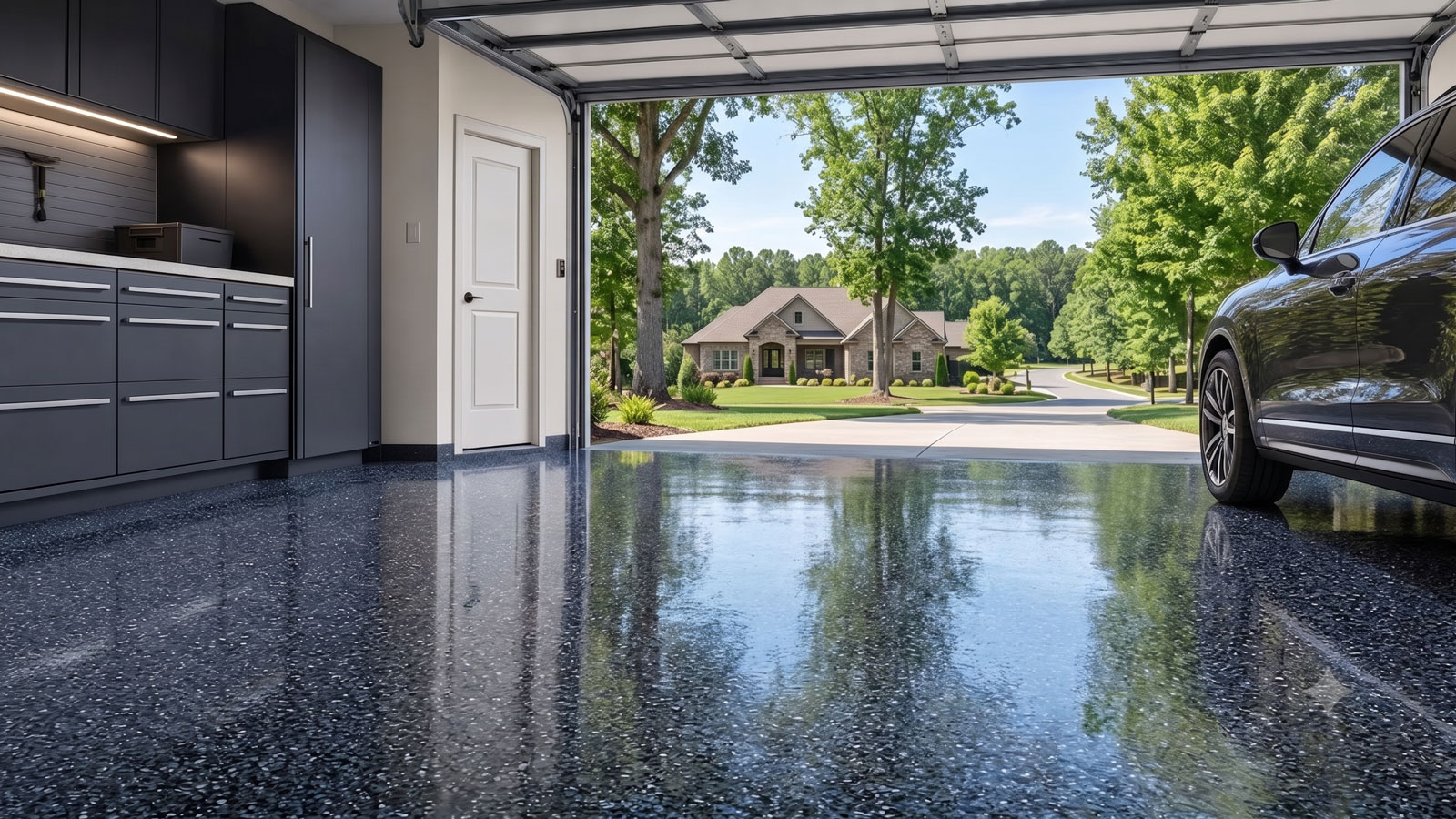
Garage Floor Coating in Orange, CT
Floor Coating Services in Orange, CT
Orange, Connecticut, is a separate suburban town between the New Haven and Milford markets, with a planning emphasis on open space, housing and transportation. Its Planning and Zoning Commission opened a 2025 update to the Plan of Conservation and Development, the ten-year advisory framework required by state law. The town lists natural resource protection, infrastructure and housing among the subjects of that review. Those facts make Orange's building patterns distinctive, but cannot tell anyone whether a specific garage slab was poured recently.
Orange has a different development setting from New Haven's dense urban blocks and the coastal portions of Milford. A homeowner may have an attached two-car garage or an accessory workspace, with concrete that was repaired or sealed long after the house was built. Winter snowmelt and road-treatment grit can enter on cars, while rainwater from a driveway or gutter may be a different concern. A coating does not solve exterior drainage or slab movement.
An epoxy, polyaspartic or decorative-flake finish can improve cleaning of properly prepared sound concrete. Before selecting the finish, inspect surface paint, old coatings, pitting, cracks and moisture suitability; on newer floors ask about curing compounds. A useful written bid explains grinding, repairs, application layers, texture and the schedule for returning vehicles.
Local Market Insight
Orange's Planning and Zoning Commission launched a 2025 ten-year development-plan update addressing housing, infrastructure and natural resources. Its suburban setting differs from both New Haven's dense streets and Milford's shoreline, while winter road residue remains a practical garage concern.
What Affects the Cost of Garage Floor Coating in Orange?
Orange garage-floor bids should reflect actual prior paint, curing history, repair needs and access for grinding equipment. A household's floor may be newer than the associated home or have been coated multiple times.
Water must be assessed at the specific property. Separate cleaning of tracked snowmelt from correction of driveway or gutter problems, and ask bidders to state the limits of their flooring work.
- Suburban slab history: Garages on established lots may have been added or repoured. Inspect actual cracks, patches, old sealers and surface soundness before estimating preparation.
- Existing paint and contaminants: A garage used for storage or hobbies may contain old coatings or vehicle fluids. Include proper removal and profiling where needed for adhesion.
- Winter melt and deicing grit: Snow and salt tracked on vehicles can deposit residue. Prepare the concrete before coating and select a texture that is practical to clean through winter.
- Driveway and roof runoff: Wet vehicles are not the same as rain entering from a gutter or sloping driveway. Address actual runoff routes separately from decorative finishing.
- Cracks, joints and repair needs: Evaluate patches and movement. Cosmetic crack filling can be part of preparation, but active structural issues require an appropriate separate remedy.
- Finish, storage and curing: Flake blends, topcoat texture, equipment staging and product temperature limits affect cost and time. Compare the complete installed specification.
Call for a clear, project-specific estimate — or request one online.
Orange's 2025 Planning Update and Individual Garage Construction
Orange's 2025 development-plan mapping identifies Race Brook, the Wepawaug Reservoir and Indian River as separate features crossing its municipal setting. It also names Racebrook Tract, Turkey Hill Preserve and the Wepawaug Conservation Area among open-space resources. A 2025 town planning update examines transportation, housing, infrastructure and natural resources. Those facts distinguish Orange from the dense New Haven city setting, but none shows water inside a particular garage.
Orange's residential properties can differ in layout and past renovation history. An attached garage may contain the original floor or a newer pour. A detached garage may have been used for storage and repair and may have old paint, oil stains or patchwork. Without inspection, neither the neighborhood's perceived age nor the plan's growth goals establish how the concrete should be prepared.
Professional preparation should identify weak patches and incompatible old coatings and create a suitable mechanical profile. Even recently placed concrete can retain curing treatments or moisture that need checking before the selected resin is applied. A moving crack or ongoing leak should not be hidden beneath a decorative finish.
Homeowners should request a written sequence of grinding, removal, repairs, layers, texture and curing, including what happens if unsound material is discovered. Those are the useful differences between estimates, not a blanket price based on suburban location.
Orange Winters, Water Entry and Coating Maintenance
Connecticut roads receive winter plowing and deicing treatment, and Orange residents regularly return home with slush, salt and grit on their vehicles. Those deposits make cleaning and surface texture relevant to garages. They do not establish that any Orange slab is deteriorating or that one product type is universally superior.
An inspection should separate water brought in by cars from runoff coming down the driveway and any persistent moisture within the concrete. If rain crosses the threshold or a downspout sends water toward the door, a drainage correction may be needed before the floor is coated. Where unexplained dampness remains, the installer should consider suitable assessment against system limits.
After proper grinding and repairs, a continuous finish may be easier to sweep than porous bare concrete. Winter residue still needs regular removal, and a decorative topcoat cannot arrest structural cracks or fix a low entrance. Ask for a texture sample that balances traction for wet shoes against cleaning effort.
Temperature and curing restrictions can matter if a garage is coated in colder months. A realistic proposal should include the work to clear the space, prepare it and keep vehicles out until the manufacturer allows their return.
Frequently Asked Questions
Does Orange's 2025 development planning tell me my garage floor is new?
No. The municipal plan addresses future land use, not the construction date or condition of an individual slab.
Can a coating stop slush and road salt from entering?
No. Vehicles still track winter residue into the garage. A sound finished floor may simplify cleaning, but the deposits must be removed.
Does an Orange garage with new concrete need grinding?
Potentially. Curing compounds, sealers, moisture conditions and required surface profile must be considered even when a slab appears new.
Will epoxy fix water from a low driveway?
No. Driveway grade or gutter drainage must be corrected separately. A decorative coating is not a drainage repair.
What should an Orange floor-coating estimate explain?
Ask about coating removal, mechanical profiling, cracks, moisture evaluation if warranted, system layers, texture, edge work and cure time.
Orange Neighborhoods & Local Context
Typical Project Cost
$3,000–$5,500
Typical range for a two-car garage. Final pricing depends on floor size, concrete condition, prep work, coating type, and finish options.
Helpful Guides
Other Service Areas